
Case Study: How an Options Trader Managed Margin Rejection in 1 Account Without Breaking the Rest of the Trade
One account gets a margin rejection while the others fill. This illustrative case study shows how an options trader kept the rest of the trade intact and set up a simple routine to avoid it next time.

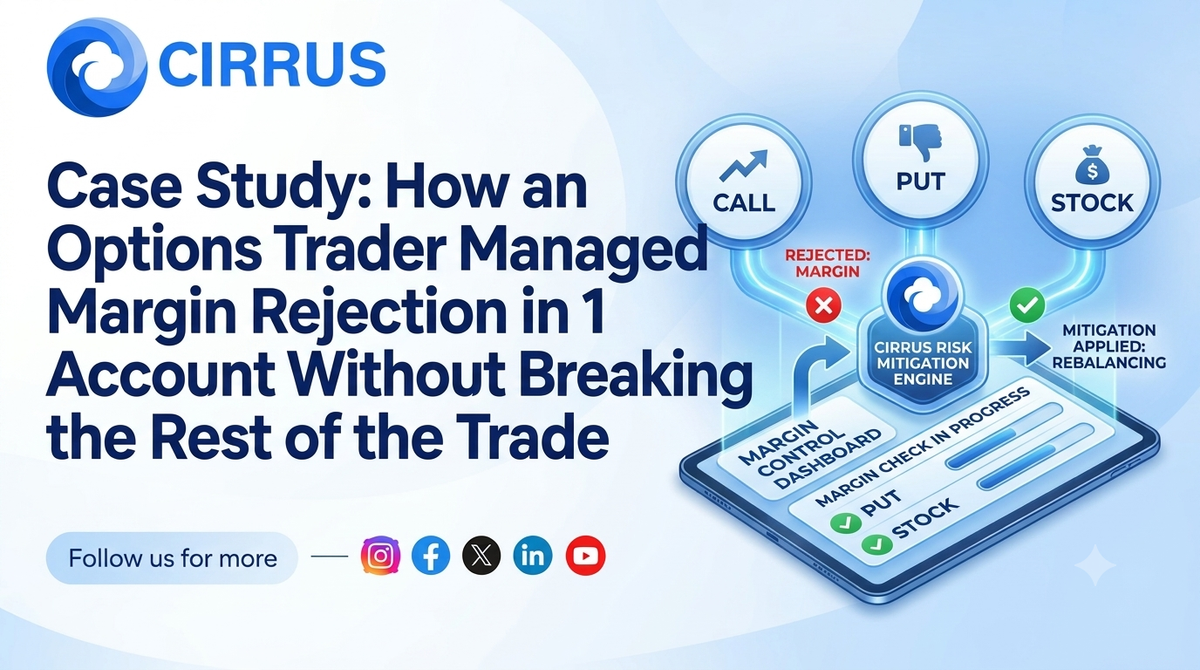
It is 9:20 AM. Your setup triggers, orders go out to three family accounts, and two of them fill. The third comes back with a margin rejection.
Now you have a trade that is live in two accounts and missing in one. What you do in the next few minutes decides whether this is a minor inconvenience or a real problem.
This is an illustrative case study built from a common scenario. The trader, accounts, and numbers are not real.
The Short Answer: What Should You Do When One Account Gets a Margin Rejection?
Do not panic and do not repeat the order blindly. Check why the account was rejected, decide whether to add funds, reduce quantity, or skip that account for this trade, and make sure the accounts that did fill are not left with an unhedged or mismatched position.
The Scenario
An options trader manages three accounts: a primary account, a spouse’s account, and a family HUF account. The planned trade is a Nifty options position scaled by lot multipliers.
- Primary account: 4 lots
- Spouse account: 2 lots
- HUF account: 1 lot
The signal fires. The primary and HUF orders are accepted. The spouse account order is rejected because available margin fell short of what the 2 lots needed. Funds had been used by an earlier position the trader forgot about.
What Goes Wrong With the Manual Approach
In a manual multi-tab setup, the rejection often shows up late. The trader is in the third tab when the second one fails, and by the time the problem is noticed, the price has moved.
Three common mistakes follow:
- Retrying at a worse price: Re-entering the rejected order after the market has moved changes the entry for that account.
- Ignoring the mismatch: The spouse account stays flat while the other two carry the trade, and the family’s exposure is no longer what was planned.
- Breaking a hedged position: In multi-leg trades, a rejection on one leg can leave another leg exposed. This is the highest risk case.
With static IP rules and daily session resets already adding friction to DIY setups, there is less room for slow manual fixes.
How the Trader Handled It
With orders routed from one place, each account is processed on its own. A rejection in one account does not cancel the fills in the others, and the rejection shows up clearly in one view.
The trader followed three simple steps:
- Read the rejection reason. It was a margin shortfall, not a connection or token error.
- Decide quickly. Options were to add funds and re-send at the current price, send a smaller quantity, or leave that account out of this trade.
- Check the filled accounts. The primary and HUF positions were single leg trades with defined stops, so they could stand on their own.
The trader chose to skip the spouse account for this trade and set a pre-market margin check for future days.
How Cirrus Supports This Workflow
Here is what Cirrus offers for situations like this:
- Single Signal, Multi-Account Fills: One trigger creates separate order requests for each linked account, so accounts are handled independently.
- Smart Lot Multipliers: Ratios are set per account in advance, so quantities stay proportionate without manual math under pressure.
- Native Static IP Binding: Orders are routed through whitelisted static IP architecture, so connection and compliance issues are less likely to be the cause of a rejection.
Frequently Asked Questions (FAQs)
1. Why do orders get rejected for margin?
Brokers reject an order when available margin is lower than the margin required at that moment. Open positions, changing volatility, and unsettled funds can all reduce what is available.
2. Does a rejection in one account affect my other accounts?
Each broker account is a separate account with its own margin, so one rejection does not change another account’s balance. Whether the other orders still go through depends on how your tool routes them, so confirm this behaviour before relying on it.
3. What about multi-leg strategies?
Place hedge legs carefully and confirm every leg is filled in each account. A missing leg can change your risk, so review positions right after execution.
4. How can I avoid margin rejections?
Check available margin in each account before the session, keep a buffer, and set lot multipliers that fit each account’s capital.
5. Do I need coding skills to manage this?
No. Cirrus is a cloud-based web terminal, and routing, tokens, and broker connections run on secure cloud servers.
At a Glance: Key Takeaways
| Metric / Dimension | Manual Multi-Tab Handling | Cirrus Connected Handling |
|---|---|---|
| Rejection Visibility | Often noticed late | Seen in one view |
| Order Handling | One account at a time | Accounts processed independently |
| Quantity Setup | Calculated by hand | Preset lot multipliers |
| Retry Risk | Re-entry at a worse price | Decision made with all accounts in view |
| Hedged Trade Risk | Easy to miss a missing leg | Fills reviewed together |
| IP Compliance | Dynamic IP, higher rejection risk | Whitelisted static IPv4 routing |
What It Means for Your Trading Routine
A margin rejection is not a failure of the strategy. It is a data point about account readiness. The traders who handle it well are the ones who see it early, know their options, and have a pre-market check in place.
The Bottom Line: One rejected account should not break the whole trade. Independent account handling, preset quantities, and a clear view of every fill let you fix one problem without disturbing the rest.
Want a clearer view of every account when you trade? Explore how Cirrus automates multi-broker execution across major Indian brokers with built-in static IP routing.
Key Facts at a Glance for Quick Reference
| Question | Answer |
|---|---|
| What is the core problem? | Margin shortfall in one account while others fill |
| What is the biggest risk? | A mismatched or unhedged position across accounts |
| What should you do first? | Read the rejection reason, then decide |
| How can you prevent it? | Pre-market margin check and sensible lot multipliers |
| Does it guarantee profit? | No, it improves visibility and control |
| Who is it for? | Traders managing multiple family or personal accounts |
Disclaimer: Investments in securities markets are subject to market risks. Read all related documents carefully before investing. This case study is an illustrative composite and does not describe a real trader, actual trades, or guaranteed results. Options trading carries significant risk, including the risk of loss exceeding the amount invested. KuberHunt and Cirrus do not provide investment advice through this content. Margin requirements and order handling depend on your broker and market conditions. Please verify account authorization and broker rules before trading across multiple accounts.