Execution Tool vs Advisory: Why a Trading Platform Doesn't Give Tips
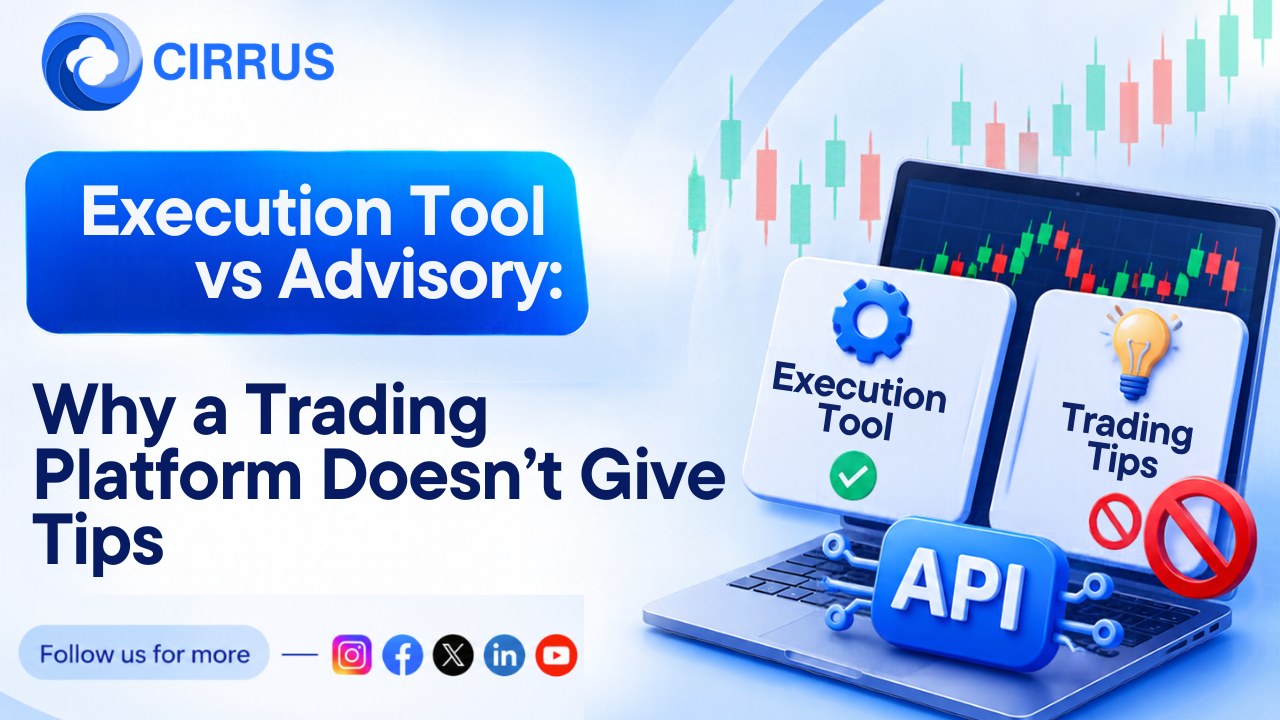
A trading platform carries out the orders you decide on. An adviser tells you what to buy or sell. Here is the difference, and how Cirrus keeps the two apart.

The short answer
An execution tool places the orders you decide on. Advice is someone telling you what to buy or sell. Cirrus is an execution tool: it says it is not a broker, a SEBI-registered investment adviser or a research analyst, and that it does not recommend any security or strategy.
You choose what to trade, in what size and when to exit. Cirrus carries out those instructions in your own broker accounts.
What an execution tool does
An execution tool is built around your instructions. On Cirrus that means:
- placing the orders you create, or the alerts you set up, in the accounts you choose
- sizing each account by the rules you set, such as a multiplier
- attaching the stop-loss and target you choose
- checking each order against the broker's rules for that account before it is sent
- keeping a log with timestamps for every order
Your orders go to your own accounts at your own brokers, and your funds and securities stay with them. Cirrus does not hold them.
Alerts come from you or from third parties. Cirrus passes them on as orders according to the rules you configure. It does not review, verify or endorse any signal, strategy or research.
What advice is, and who gives it
Advice is a recommendation about what to buy, sell or hold. In India it comes from registered professionals, such as SEBI-registered research analysts and investment advisers. Each of them is responsible for their own registration and advice.
A platform that only executes does not rank stocks for you, pick your trades or tell you when to enter. If it did, it would be giving advice, and that is a different job done by people with their own registration.
How Cirrus keeps the line clear
Orders on Cirrus come from three places, and in each one you hold the decision.
- You, by hand. You fill in the order ticket with your own symbol, quantity, price and exits.
- Your own alerts. In a TradingView or Chartink strategy, you describe the legs, the accounts and the exit rules once. The TradingView alert message only says entry or exit and carries your secret.
- An analyst's calls on Kuberhunt. Kuberhunt, Cirrus's sister company, publishes trade recommendations from research analysts. If you link it, their calls can reach your accounts on your terms. You can mirror or override the product, set lots and a capital cap per trade, and cap how many entries a day the calls can open.
Before anything trades real money, a forward test or a test run shows what an alert would do without placing any orders.
Kuberhunt is a technology and research distribution platform that connects investors with SEBI-registered research analysts and investment advisers. It is not a research analyst or investment adviser itself. You can find out more at Kuberhunt.
How to stay on the right side as a trader
- Know who made the call. If someone gives you trade ideas, check that they are a SEBI-registered research analyst or investment adviser on SEBI's official list. How to Auto-Execute SEBI-Registered Research Analyst Signals walks through the check.
- Be careful with promises of guaranteed returns. No tool or analyst can guarantee them.
- Set your own size and limits before you automate anything.
- Test first, with a forward test or a test run.
- Remember that you are responsible for every trade in your accounts. Connect only accounts you own or are legally authorised to operate.
Common questions
Does Cirrus give stock tips? No. Cirrus says it does not recommend any security or strategy, and that nothing on its site, in the app or on its blog is investment advice.
Is a Kuberhunt call advice from Cirrus? No. The calls are published by research analysts on Kuberhunt. Cirrus passes them on as orders under your rules and does not review, verify or endorse them.
Can I use Cirrus without following anyone? Yes. You can place orders by hand or use your own TradingView and Chartink alerts.
Is Cirrus a broker? No. Your orders go to your own accounts at your own brokers, and your funds and securities stay there.
Who is responsible for my trades? You are. Cirrus's risk disclosure says you are responsible for all trades in your accounts.
Key facts at a glance
Disclaimer
Investments in securities markets are subject to market risks. Read all related documents carefully before investing. This article is for general information only and is not investment advice. Cirrus is a technology platform, not a broker, SEBI-registered investment adviser or research analyst. Kuberhunt and Cirrus are sister companies. Research recommendations are not guarantees of returns, and you are responsible for your own investment decisions. Please verify any analyst's SEBI registration before acting on their calls.