Algo-ID and Order Tagging: What It Means for Your API Orders
Every algo order now carries an identifier issued by the exchange. Here is what that means, what you do not have to do, and what to check with your broker.

The short answer
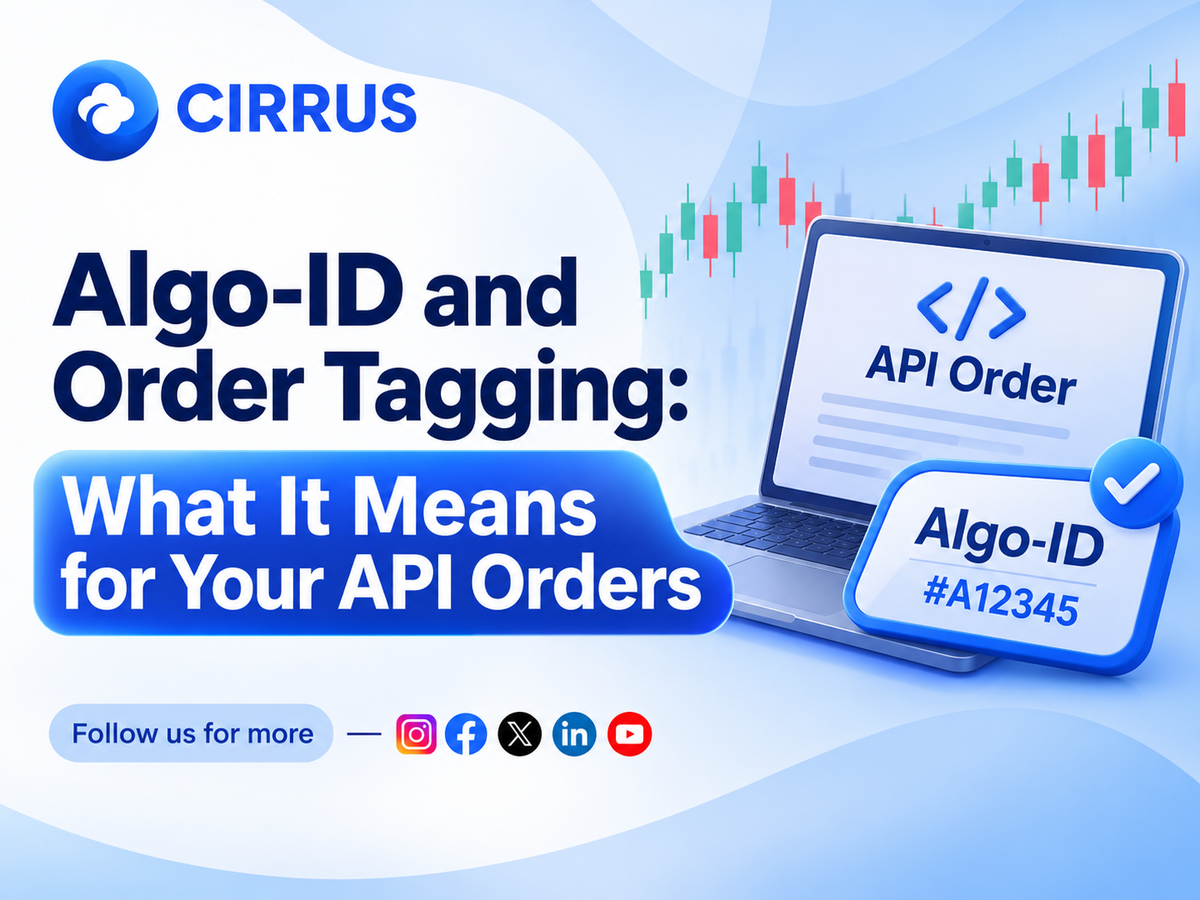
An Algo-ID is an identifier issued by the exchange and attached to an algo order so the order can be traced. NSE's standards say every algo order carries one, whether it sits below or above the 10 orders per second threshold.
If you trade through a broker API and stay below that threshold, you do not register your strategy yourself. Your part is the rest of the setup: a whitelisted static IP and a sign-in every trading day.
Why every algo order carries an ID
The reason is the audit trail. NSE's standards say all algo orders, below and above the threshold, carry an identifier provided by the exchange, so each order can be traced. Brokers must also keep a sound audit trail of API orders and trades, with the actual user identified, for at least 5 years.
Where the ID comes from depends on who built the algo:
- Your own algo, above the threshold. You register it with the exchange through your broker. The exchange issues a registration ID, and your orders are tagged with it.
- A broker's algo. The broker registers it and gets an exchange algo ID. Every client order through it carries that ID.
- An algo from an empanelled provider. The provider registers its algos, and the exchange assigns a unique algo ID to each one.
- Orders below the threshold. The exchange provides a generic Algo-ID for such algos.
For a retail trader who stays below the threshold, the last case is the one that matters. You can read the rule yourself in section G of NSE's circular.
What you do and do not have to do
You do not have to:
- register your strategy with the exchange while you stay below 10 orders per second per exchange
- go to the exchange yourself, because registration, where it is needed, goes through your broker
You still have to:
- use an API key tied to a static IP your broker has whitelisted
- sign in again every trading day
- keep your order rate under the threshold, or register through your broker if you need to go above it
If you cross the threshold, your broker forwards your details to the exchange. Once the strategy is registered, the exchange issues a registration ID and your orders are tagged with it. Brokers can also reject orders that go over the limit.
Whether your broker shows the tag in your order records differs from broker to broker, so ask yours where to look. For the full threshold story, read 10 Orders a Second, No Extra Paperwork.
How Cirrus fits in
Cirrus is an NSE and BSE empanelled algo vendor. Here is what Cirrus states publicly about orders sent through it:
- Each connected account sends orders from its own dedicated static IP, which you whitelist with your broker.
- Each order is checked against the broker's rules for that account before it is sent.
- Every order keeps a log with timestamps for each step.
- Cirrus's risk disclosure says order rates above the exchange threshold need a registered strategy, and that orders that do not meet your broker's requirements are rejected.
[CONFIRM before publishing: Cirrus's public pages do not describe how Algo-ID tagging is applied to orders sent through Cirrus. Ask the Cirrus tech or compliance team for approved wording and add it here.]
See Cirrus's security page for the full list of protections.
Common questions
What is an Algo-ID? An identifier issued by the exchange and attached to an algo order, so the order can be traced.
Do I need to get an Algo-ID myself? Not below 10 orders per second. The exchange provides a generic Algo-ID for such algos. Above the threshold, you register through your broker and the exchange issues the ID.
Does the Algo-ID apply to every algo order? Yes. NSE's standards say all algo orders, below and above the threshold, are tagged.
Who is responsible for my API orders? Your broker. NSE's standards say brokers are fully responsible and liable for all orders that come through their API systems. You still decide what to trade.
Where can I read the rule? In section G, Algo ID tagging, of NSE's circular of 5 May 2025.
Key facts at a glance
Disclaimer
Investments in securities markets are subject to market risks. Read all related documents carefully before investing. This article is for general information only and is not investment advice or legal advice. Tagging rules and broker practices can change, so please check NSE's circular and your broker's notices before you rely on any detail here. Cirrus is a technology platform. It is not a broker and does not give investment advice.